
Total solutions for biologics analysis and quality research, covering testing and characterization needs at every stage from sequence to IND and BLA.
Full-chain analytical and quality research from developability evaluation to biosimilar similarity assessment.
A high-quality protein drug should possess stable physicochemical and structural characteristics, with stability that meets the technical requirements of manufacturing and formulation processes.
Non-GMP / Phase I / II drug substance and drug product release and characterization analysis services.
CMC-related quality study services for non-GMP toxicology batches and each stage of Phase I / II / III, process characterization and process validation.
Identification, testing and in-depth characterization of product-related and process-related impurities.
During process development, quality attribute-related testing services and analytical method development and validation services are available.
Batch consistency evaluation services that monitor process robustness and batch-to-batch product quality performance.
Biosimilar evaluation services supporting quality comparison and regulatory filing.
During cell line construction and clone screening, providing testing services and evaluation related to critical quality attributes (CQAs) and structural characterization.
The analytical sciences department is fully staffed and led by experts with extensive industry experience. It has established a complete analytical technology platform that allows rapid development of project-specific analytical methods on top of platform methods, fully supporting all quality analysis work from DNA sequence through IND and BLA to commercialization.
Responsible for establishing and maintaining the analytical quality system, providing compliance and analytical methodology assurance for CMC filings from IND through BLA and commercialization.
Providing clients with comprehensive method development and validation services for biologics identification, content determination, and impurity identification and quantification, along with other quality-related testing services.
Equipped with advanced characterization and testing instruments for biologics drug substance and drug product, Zencore offers clients one-stop integrated solutions for structural and formulation characterization and related quality studies.
Fully supporting all quality analysis work for the ADC business unit, from new drug discovery and developability evaluation through IND filing and BLA to commercialization.
Core analytical instruments of the analytical sciences platform, underpinning full-chain analytical capability from structural characterization to quality research.
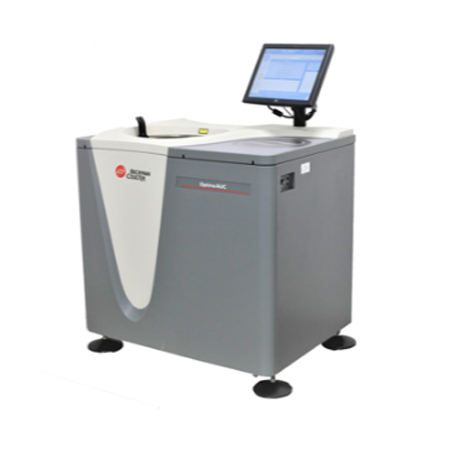
A matrix-free, in-solution characterization technique for molecular weight and oligomeric state, homogeneity and binding interaction analysis.
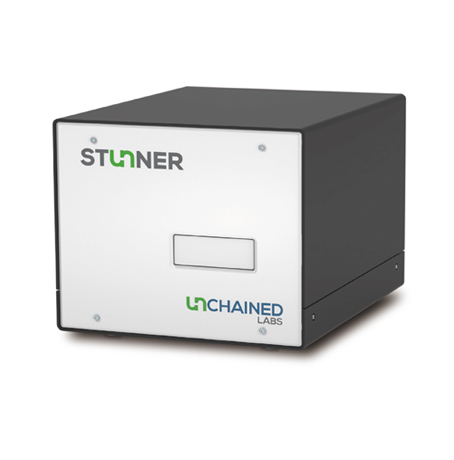
A label-free biolayer interferometry platform supporting rapid biologics quantification and binding interaction kinetics analysis.
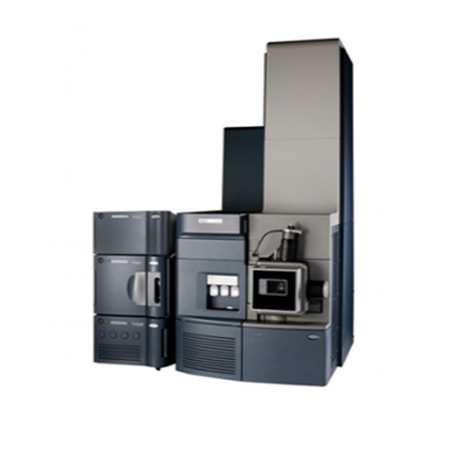
Intact molecular weight determination, peptide mapping, and in-depth characterization of charge variants and glycan profiles.
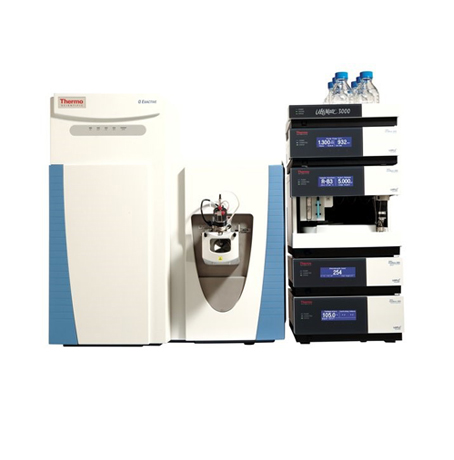
High-precision quality determination of biologics and structural identification of product-related impurities.
Method development practice from the front line of biologics activity analysis and quality research.
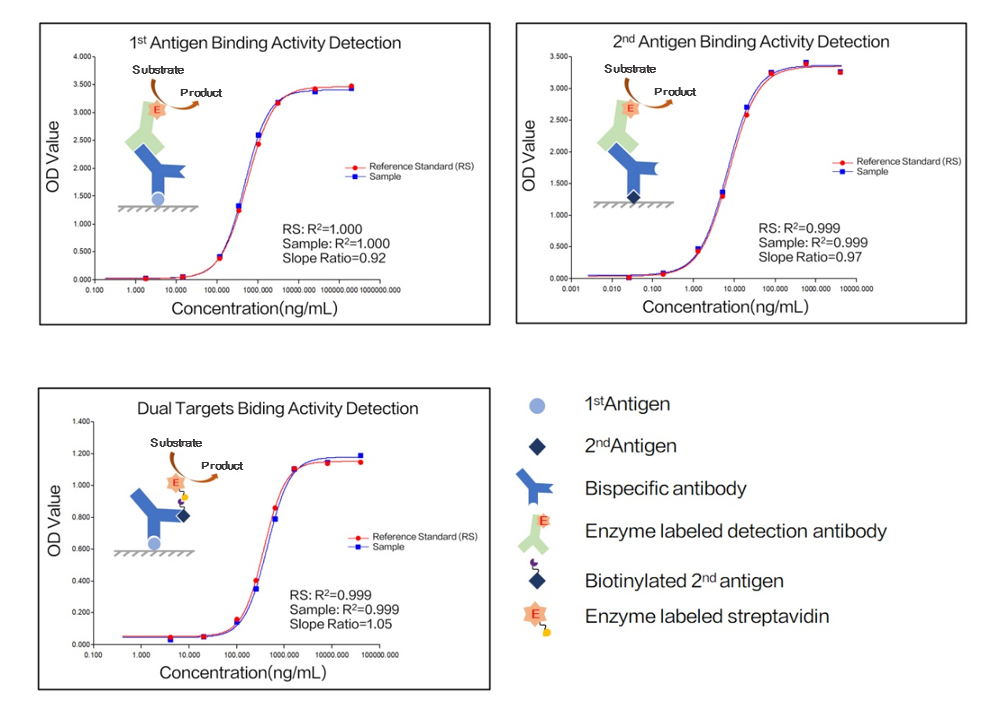
In a bispecific antibody project, to meet the need for measuring the relative binding activity of both the dual targets and each single target, the Zencore team developed and optimized a binding activity assay that treats the bispecific antibody as a whole, while also developing separate assays for each of the 2 individual targets. Results showed that both the integrated dual-target binding activity assay and the two single-target assays met the requirements for product release and stability testing. Because the affinities of the bispecific antibody for the two individual targets differ considerably, the dual-target activity assay was optimized by selecting one target antigen (Antigen 1) as the coating antigen and biotinylating the other target antigen (Antigen 2), which then reacts with enzyme-labeled avidin to form an "Antigen 1 - bispecific antibody - Antigen 2 - biotin - enzyme-labeled avidin" complex. Antigen and bispecific antibody concentrations, incubation and color development conditions were then optimized to establish a robust and reliable method, and method validation was completed for 3 binding activity assays.
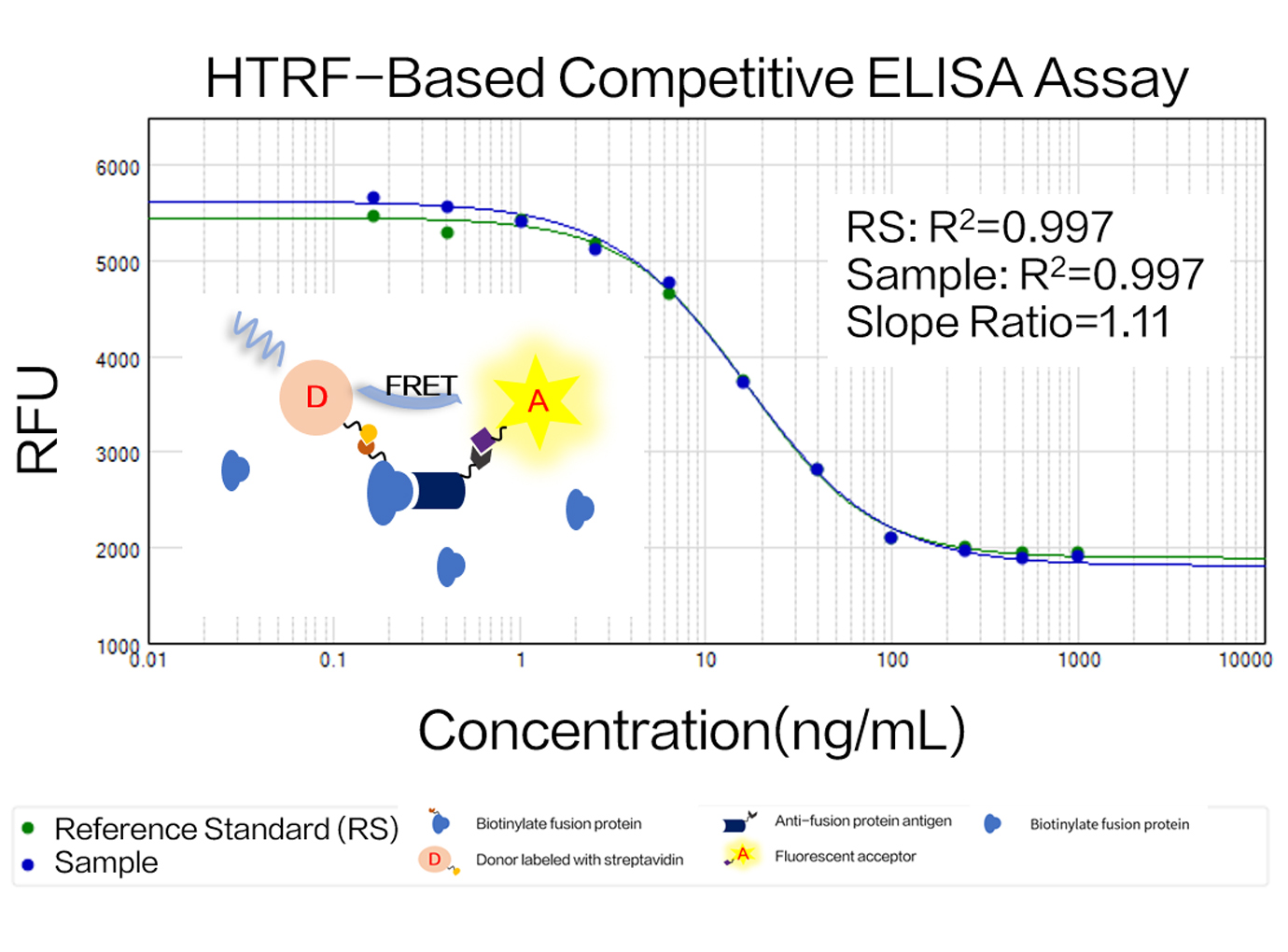
In a fusion protein project, because the protein molecule lacks an IgG Fc fragment, conventional sandwich ELISA could not be used. The activity team therefore established a competitive ELISA method to measure fusion protein binding activity: an in-house biotinylated fusion protein competes with the test fusion protein for binding to the antigen, so signal intensity is inversely related to test fusion protein concentration, yielding an inverse S-curve that reveals the activity of the unlabeled fusion protein. The project also introduced homogeneous time-resolved fluorescence (HTRF) technology, using a europium-chelated label and an XL665 complex as donor to generate fluorescence resonance energy transfer (FRET) with the fluorescent acceptor. This method offers high sensitivity, accuracy and reliability.
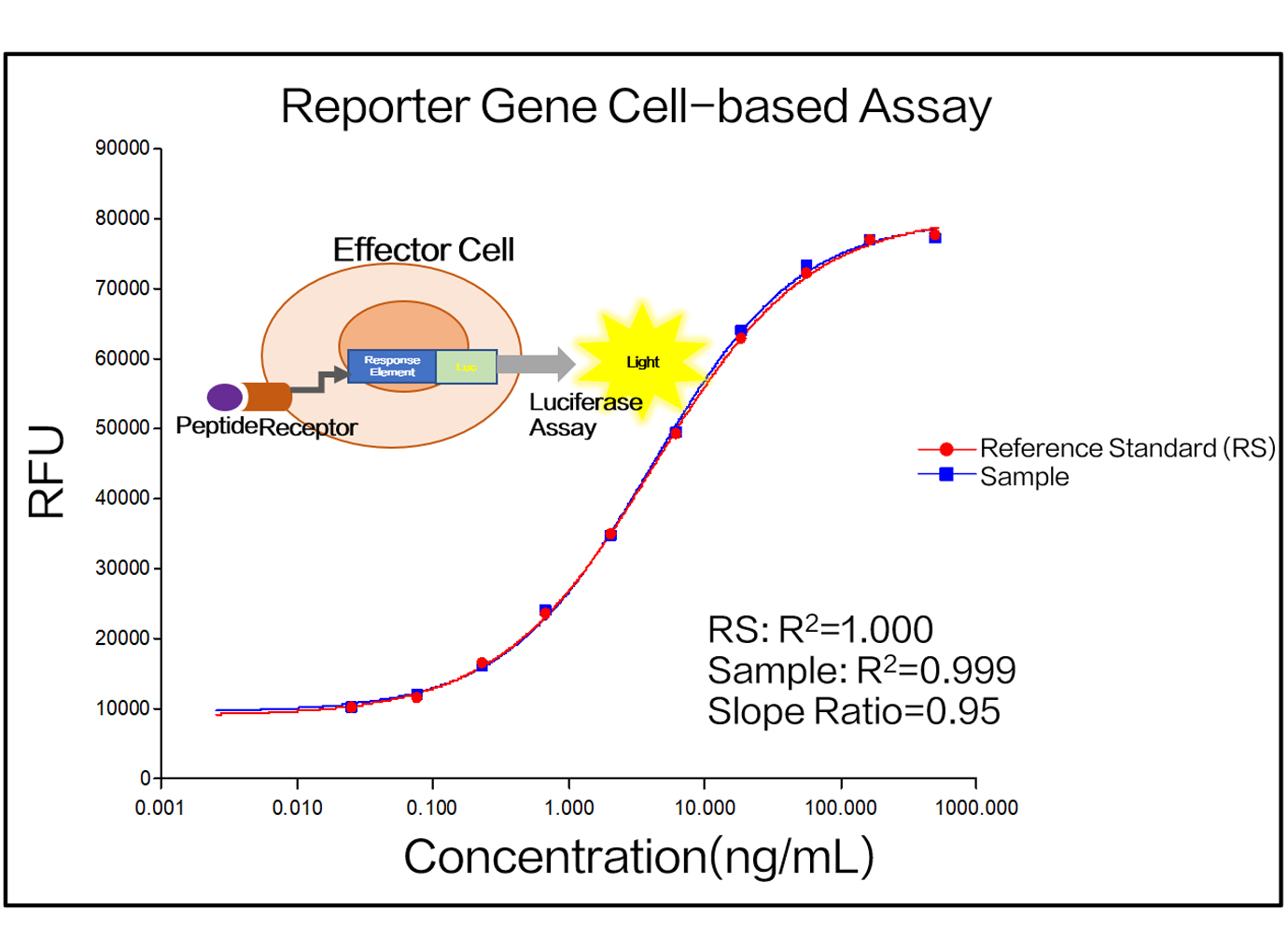
In a peptide project, the Zencore team first constructed a functional cell line: two plasmids were electroporated into null cells, followed by parent clone generation, monoclonal screening, and monoclonal signal and stability evaluation. The best functional cell line selected enables luciferase expression upon peptide binding to the target protein. In parallel, the team developed and validated the reporter gene biological activity assay.
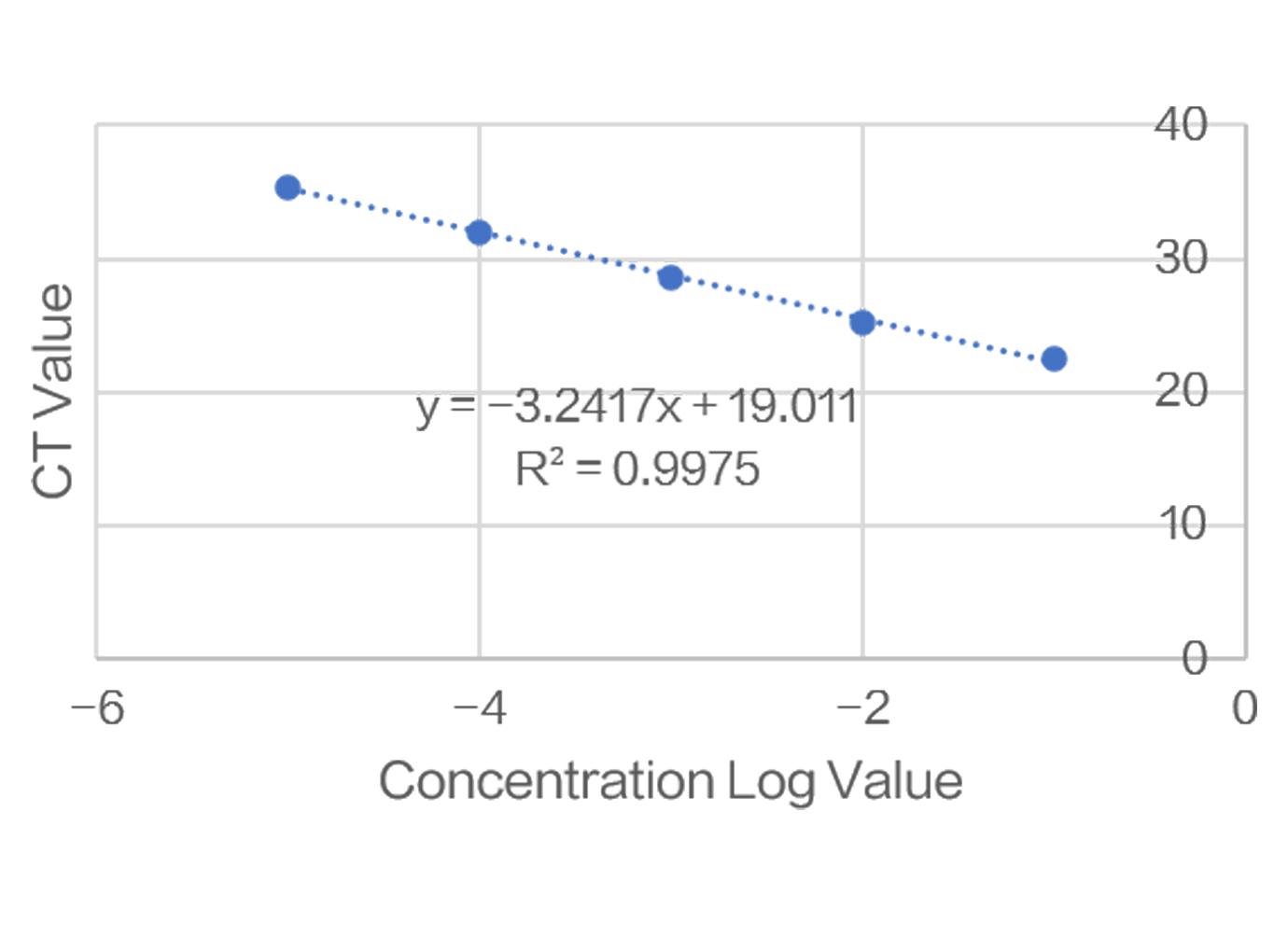
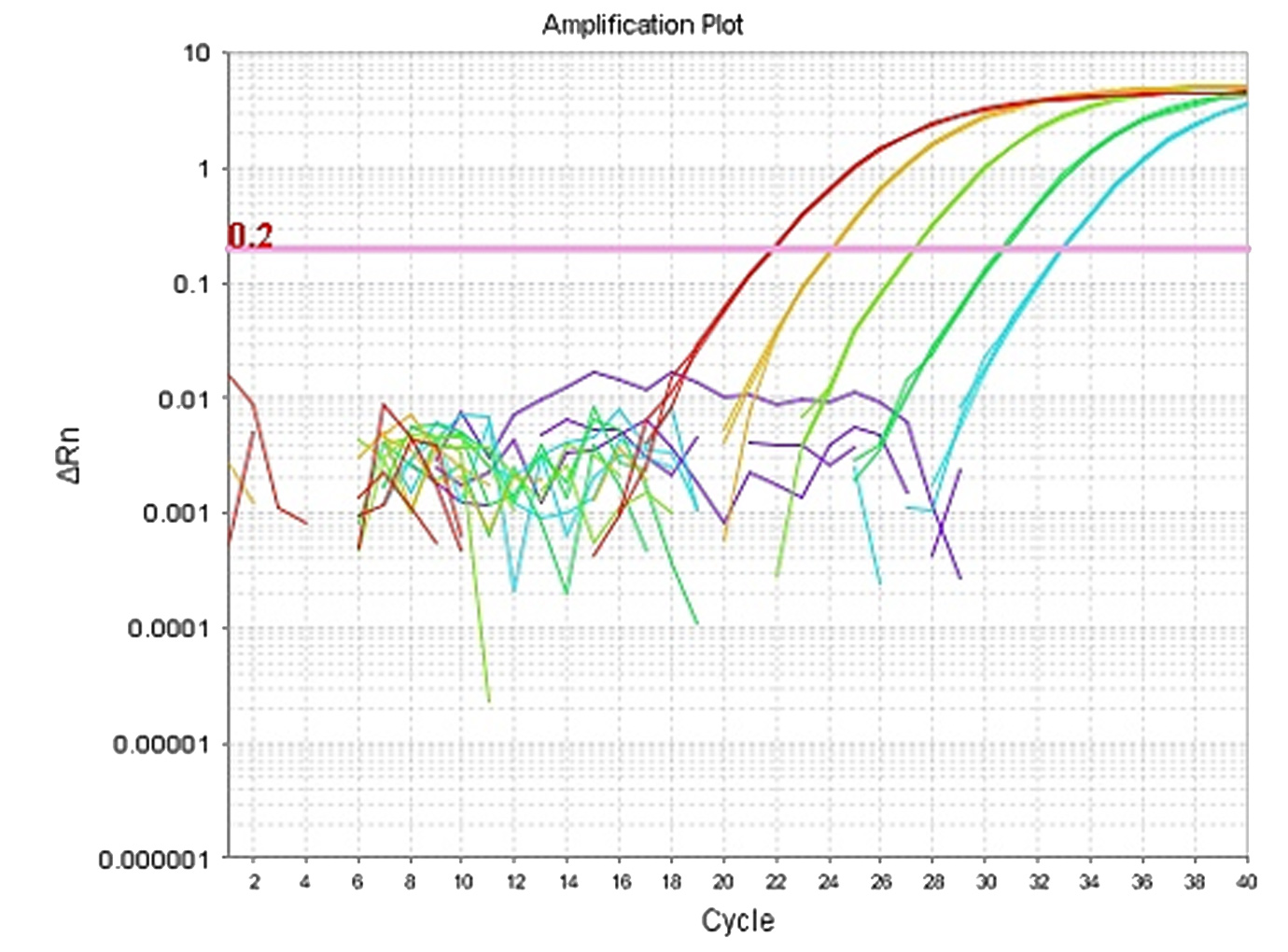
In an RNA project, the activity team developed and established a semi-quantitative RT-PCR method for miRNA detection: total RNA in the sample is first purified by spin-column extraction, miRNA is reverse-transcribed into cDNA, then a 3-step PCR attaches different adapters to both ends of the sequence and amplifies it, and finally quantitative fluorescent PCR (qPCR) is used to derive the relative miRNA content from CT values. Method validation was also completed.
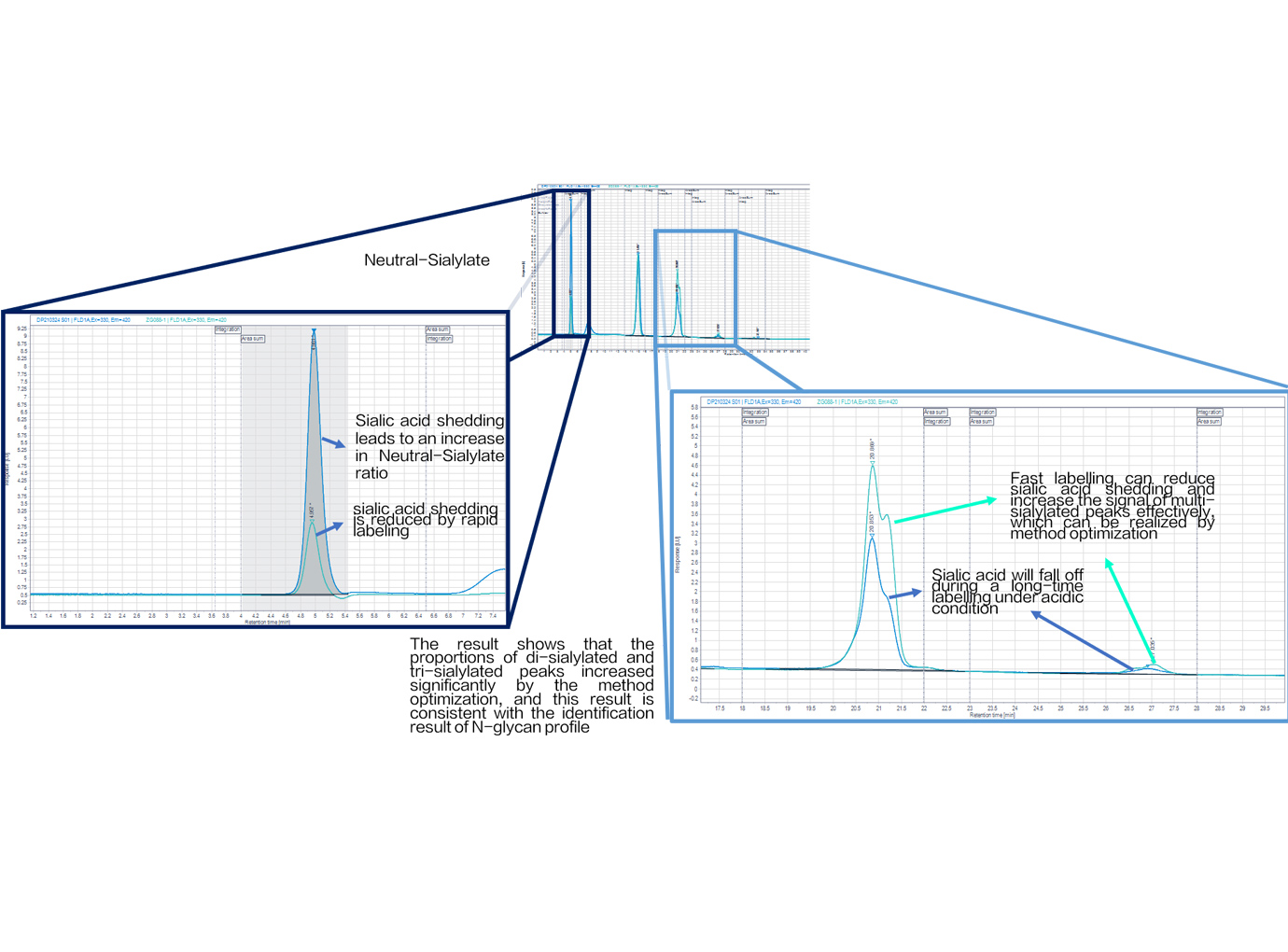
Accurate measurement of sialic acid distribution (Z value) is important for quality control of glycoproteins with high sialic acid content. Zencore applies a rapid-labeling 2-AB glycan kit (HiTang® N-glycan detection kit) that creatively solves the systematic error caused by sialic acid loss during sample preparation, enabling accurate determination of sialic acid distribution (Z value).
From developability to BLA release, one-stop support for analysis and quality research at every stage.
Inquire now